About the Lovejoy Center
The Lovejoy Center for Bringing Biodiversity, Conservation Science, and Policy advances the legacy of Tom Lovejoy by generating actionable science, fostering interdisciplinary collaboration, and connecting knowledge to policy solutions that safeguard global biodiversity. With an emphasis on conservation solutions, the Center develops and supports innovative approaches that protect species, sustain ecosystems, and promote a thriving planet.
Position Overview
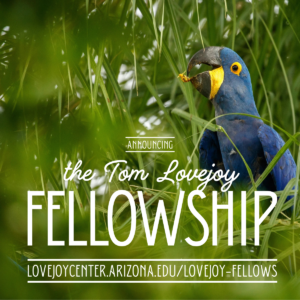
The Lovejoy Center invites creative and collaborative applicants for a Postdoctoral Research Associate position within the Tom Lovejoy Conservation Fellowship program. This fellowship addresses global grand challenges in biodiversity and conservation science, including climate change and biodiversity, human and One Health, governance and policy, and food systems and infrastructure. Successful candidates will conduct cutting-edge research, contribute to interdisciplinary initiatives, and help translate scientific insights into actionable solutions.
Research Environment
Fellows will join the Lovejoy Bridging Biodiversity & Conservation Science (BBCS) research team, established in 2016, which contributes robust and predictive research on emerging issues to prevent species extinction, preserve ecosystem and human health, and sustain food security across multiple scales.
Research topics may include, but are not limited to: weather and climate extremes; biodiversity and conservation in highly biodiverse regions such as the Amazon rainforest and beyond; invasive species; landscape restoration; urban landscapes and design; and other cross-disciplinary conservation challenges. The position emphasizes applying quantitative analysis skills within interdisciplinary frameworks.
Professional Development
The Tom Lovejoy Conservation Fellowship provides professional development support for academic career goals through faculty mentorship, as well as opportunities to explore careers in government, industry, or other sectors through collaborations with partners. Additional training, certifications, and career development resources are available through the University and UA Postdoctoral Affairs.
Duties & Responsibilities
Work under the supervision of a primary Lovejoy BBCS faculty member, at least one faculty member from another discipline, and/or a non-academic community partner
Collaborate with postdoctoral fellows and faculty on interdisciplinary projects and group synthesis papers
Develop proposals for external funding aligned with the Lovejoy BBCS mission
Coordinate an annual research dissemination event
Present research findings and methodologies at relevant conferences (travel sponsored by the University)
Collaborate with community partners to advance or diversify skill sets
Demonstrate flexibility to support emerging projects aligned with the Lovejoy BBCS mission
Participate in department-wide training focused on building an anti-racist and more equitable society and promoting social, racial, and environmental justice
Perform additional duties as assigned
Knowledge, Skills, & Abilities
Effective communication skills
Strong teamwork and collaboration abilities
Scientific data analysis skills, including the application of theory, frameworks, and computational methods
Familiarity with data science software
Academic writing proficiency
Public presentation skills
Strong time management and organizational skills
Minimum Qualifications
Fellowship intended for early-career researchers
PhD completed at an accredited institution by the fellowship start date
PhD awarded no more than five years prior to the fellowship start date
Preferred Qualifications
PhD or doctoral degree in conservation, economics, sociology, political science, geography, civil and environmental engineering, environmental science and policy, natural resources, public policy, environmental health, public health, or closely related disciplines
Experience in at least two of the following areas: GIS software; spatial analysis and visualization; programming in R, Python, or similar languages; epidemiology; etiology; data communication; systems evaluation; or quantitative data collection
Application Deadline
January 30, 2026
Application Process & More Information
For full details on eligibility requirements, required application materials, and the complete submission process, please consult the full position announcement at the following link: Tom Lovejoy Conservation Fellows