
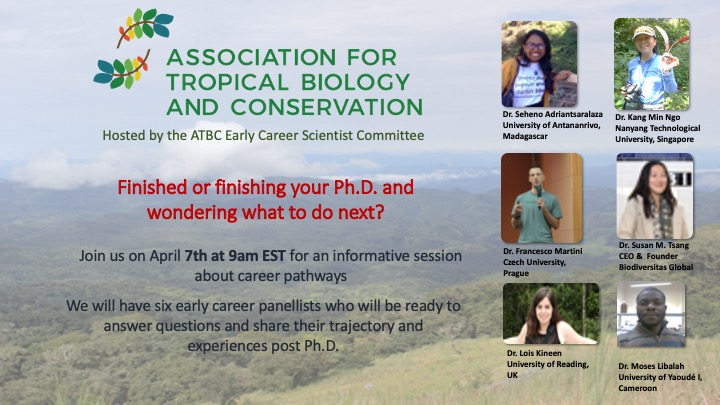
Join us on April 7th at 9am EST for an informative session about career pathways.
We will have six early-career panelists who will be ready to answer questions and share their trajectory and experiences post Ph.D.
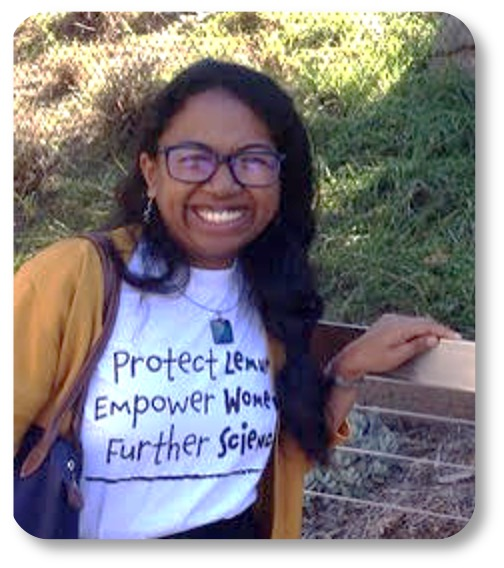
Seheno Andriantsaralaza
University of Antananarivo, Madagascar
s.andriantsaralaza@gmail.com
Seheno is a tropical ecologist with experience in conservation biology, ecology and wildlife trade. Since her PhD in 2015, her research interests have been focusing on plant-animal interactions, seed dispersal ecology with a strong interest in large-fruited plant species such as baobabs whose fruits were dispersed by extinct Megafauna. After her PhD, she has worked as a scientific coordinator at the NGO Reniala- Lemur Rescue Center. This work drove her to become a lemur advocate and passionate about conservation. She is currently working as Madagascar Manager of the Lemur Conservation Network and as in-country director of NGO Lemur Love. She pursues her research on Malagasy baobabs funded by PEER (Partnership for Enhanced and Engagement in Research) USAID program and the Explorers Club Discovery grant.
Keywords: Baobabs, Lemurs, Madagascar, Megafauna, Plant-animal interactions, seed dispersal.
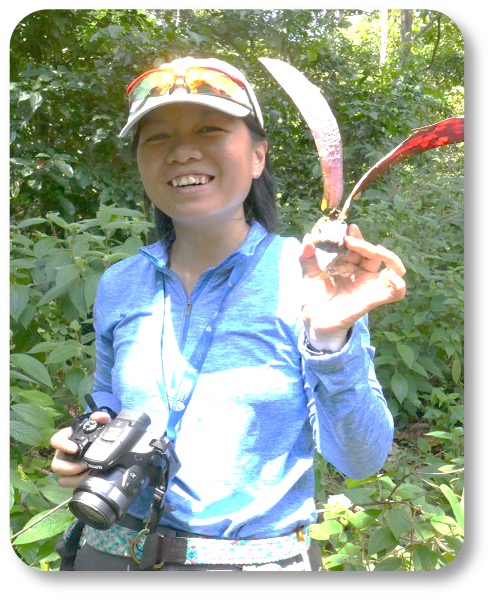
Kang Min
Nanyang Technological University, Singapore
Kang Min is a forest ecologist and research coordinator at the Asian School of the Environment, Nanyang Technological University. She completed her PhD at the Tokyo Metropolitan University in Japan. Her research interests include tree population demographics and growth using permanent forest plots, secondary forest recovery, forest restoration, urban forests, and human-wildlife interactions. She is currently also collaborating with engineers on the use of remote sensing and drones to monitor forest cover and land use change.
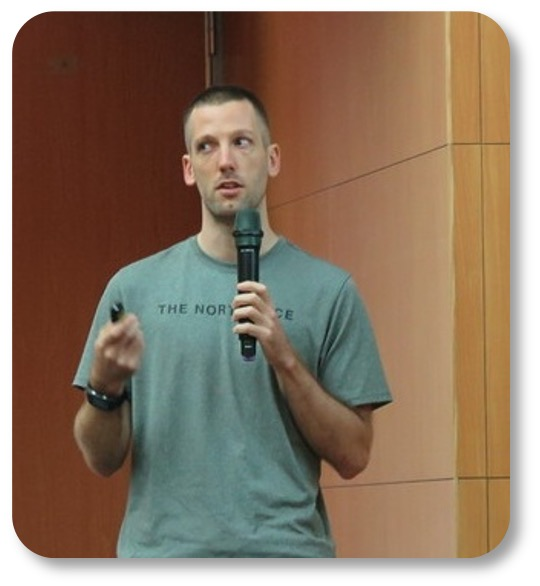
Francesco Martini
Czech University, Prague
Francesco is a plant ecologist that mostly studies forest regeneration dynamics in subtropical Asia. He has worked in natural forests in south China and Taiwan where he researched the effects of biotic and abiotic factors on seedling diversity and demography. He also investigates plant-herbivore interactions, studying patterns of herbivore damage across species and communities, and their drivers. He obtained a BSc and a MSc in Italy and his PhD from Guangxi University in China. After a first postdoc at the National Dong Hwa University in Taiwan, he has now returned to Europe for a new postdoc at the Czech University of Life Sciences Prague. He is now expanding his research to the European forests.
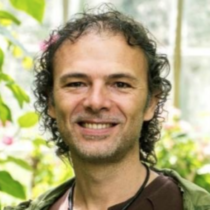
Michelle Scobie
Lecturer, The University of the West Indies at St. Augustine, Trinidad and Tobago.
Global Environmental Governance and Small States: Biodiversity governance in the insular Caribbean
Michelle Scobie, PhD, LLB, LEC, is a lecturer and researcher at the Institute of International Relations at The University of the West Indies (UWI), St. Augustine and Co-Editor of the Caribbean Journal of International Relations and Diplomacy. She has practiced as an attorney at law in Trinidad and Tobago and Venezuela. She is a member of the Caribbean Studies Association, the International Studies Association, the University of the West Indies Oceans Governance Network, the Earth System Governance Global Research Alliance, the Future Earth Ocean Knowledge Action Network and the International Studies Association. Her research areas include international law, international environmental law and developing states’ perspectives on global and regional environmental governance. Her most recent book: Global Environmental Governance and Small States: Architectures and Agency in the Caribbean.
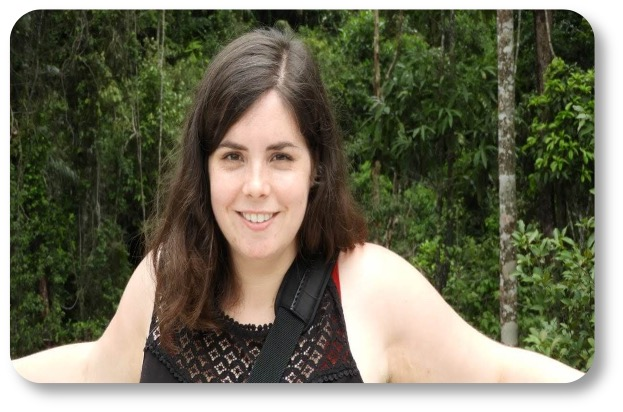
Lois Kinneen
University of Reading, UK
lois.kinneen@gmail.com
Lois is a tropical ecologist with strong interests in plant-insect interactions. She obtained her undergraduate and MSc. from Trinity College Dublin where she studied Botany and then Biodiversity and Conservation. In the summer between these two degrees, Lois participated in a field course with the Tropical Biology Association at Kibale National Park, Uganda, which sparked a passion for tropical rainforests. She earned her PhD at Griffith University in Australia, focusing on seedling herbivory in fragmented rainforest in Malaysian Borneo. Lois is now a postdoctoral researcher at the University of Reading working in the Department of Sustainable Land Management.
Keywords: Tropical ecology; sustainable agriculture; plant-insect interactions; rainforests
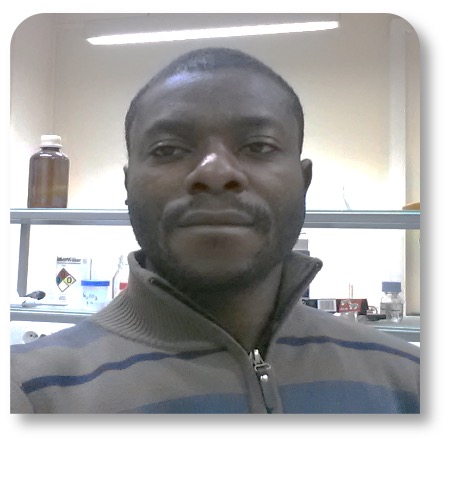
Moses Libalah
University of Yaoudé I, Cameroon
libalah_moses@yahoo.com / mblibalah@gmail.com
Moses is a tropical botanist and ecologist who studied and obtained all university degrees from Cameroon. His research focuses on monitoring tropical forest dynamics. He works in different ecosystems in the Congo Basin where he is researching on functional traits and environmental drivers of tree community structure and composition. His research expands quantification, prediction and variability of aboveground biomass, allometric equations associated to biomass predictors and is now working on the demography of tree communities. Dr Libalah is a permanent lecturer at the University of Yaoundé I in Cameroon.
Keywords: aboveground biomass; demography; environmental drivers; functional traits; height-diameter allometric equations